
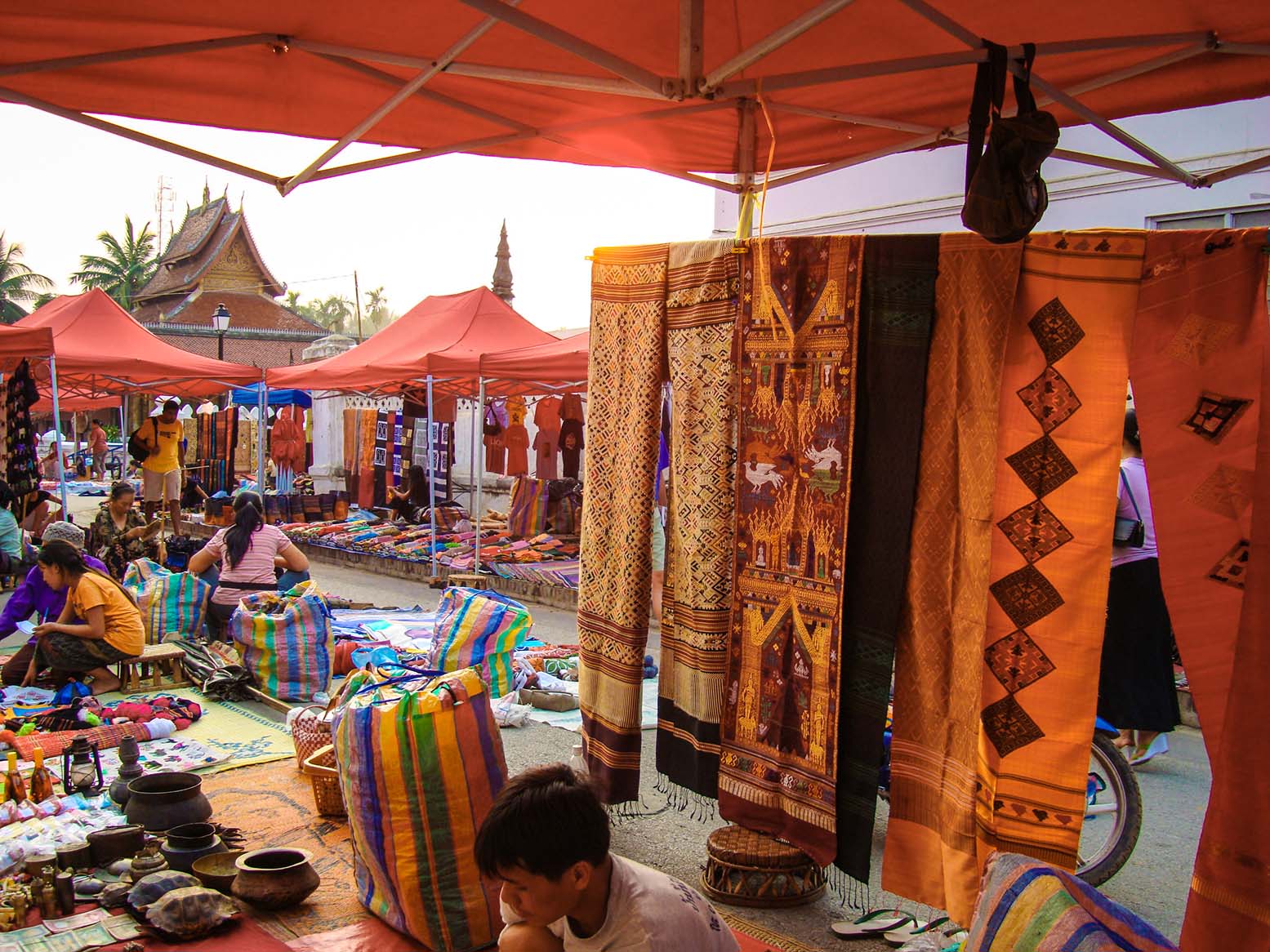
It is the question that always comes up the night before the flight home, suitcase open on the bed: what should I buy in Laos? The answer is easier here than in most places, because Laos kept what many countries lost – looms still working in village yards, paper made by hand from mulberry bark, and coffee planted by the French a century ago and picked today by the grandchildren of the people who planted it.
We are a local agency based in Vientiane, and we have been walking travellers through these workshops and markets for years. Here is what deserves space in your luggage, where to buy it, and – the part nobody reads before paying – what Lao customs will not let you take out of the country.
Handwoven textiles: the real treasure
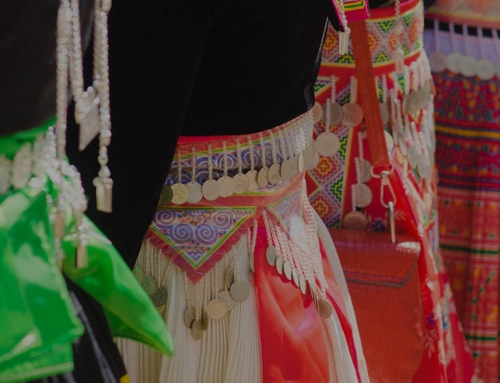
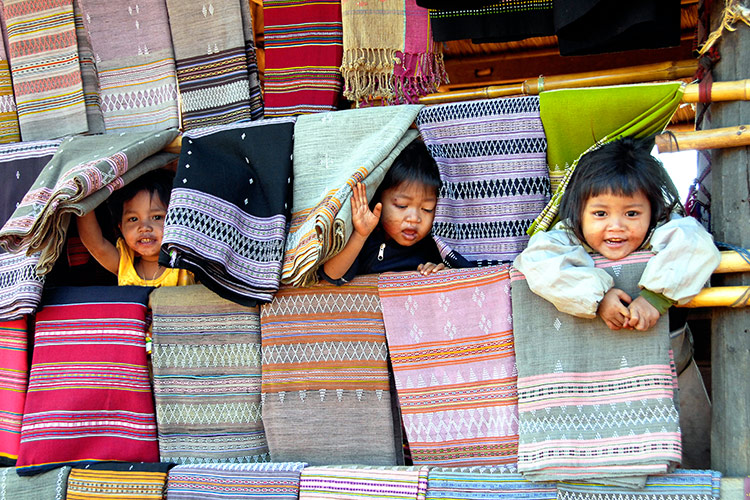
If you only bring one thing home, make it a textile. Weaving in Laos is a family craft, passed from mother to daughter, and the patterns change from one ethnic group to the next: diamonds and naga serpents among the lowland Lao, deep reds and dense embroidery among the Hmong, sharp geometry among the Tai Dam. A Lao textile is not just decoration – it tells you where it came from.
The sinh, the scarf and the pha biang
The sinh is the tube skirt Lao women wear every day, finished with an ornate border called the tin sinh. It is the most meaningful thing you can bring back, and it works beautifully at home once restitched as a straight skirt. The silk scarf remains the unbeatable classic: weightless in a bag and available at every price point. The pha biang, the sash women wear across one shoulder on festival days, makes a striking table runner.
How to tell handwoven silk from the rest
Three quick checks. Look at the reverse side: on a handwoven piece the pattern reads cleanly on both faces and the weft threads are visible, while a machine-made piece has a messy back. Crush a corner in your fist: real silk springs back, polyester keeps the crease. And natural dyes – indigo, lac, bark, turmeric – produce slightly uneven colour. That irregularity is the signature of handwork, not a flaw.
In Luang Prabang, Ock Pop Tok – the name means “East meets West”, founded in 2000 by a Lao and a British weaver – is the benchmark: a shop in town and a weaving centre on the Mekong where you can watch the looms and take a half-day to three-day workshop. Prices are higher than the night market, but you know who wove the piece and what she was paid. Our Luang Prabang city break itineraries always leave room for a visit like this.
Bolaven Plateau coffee
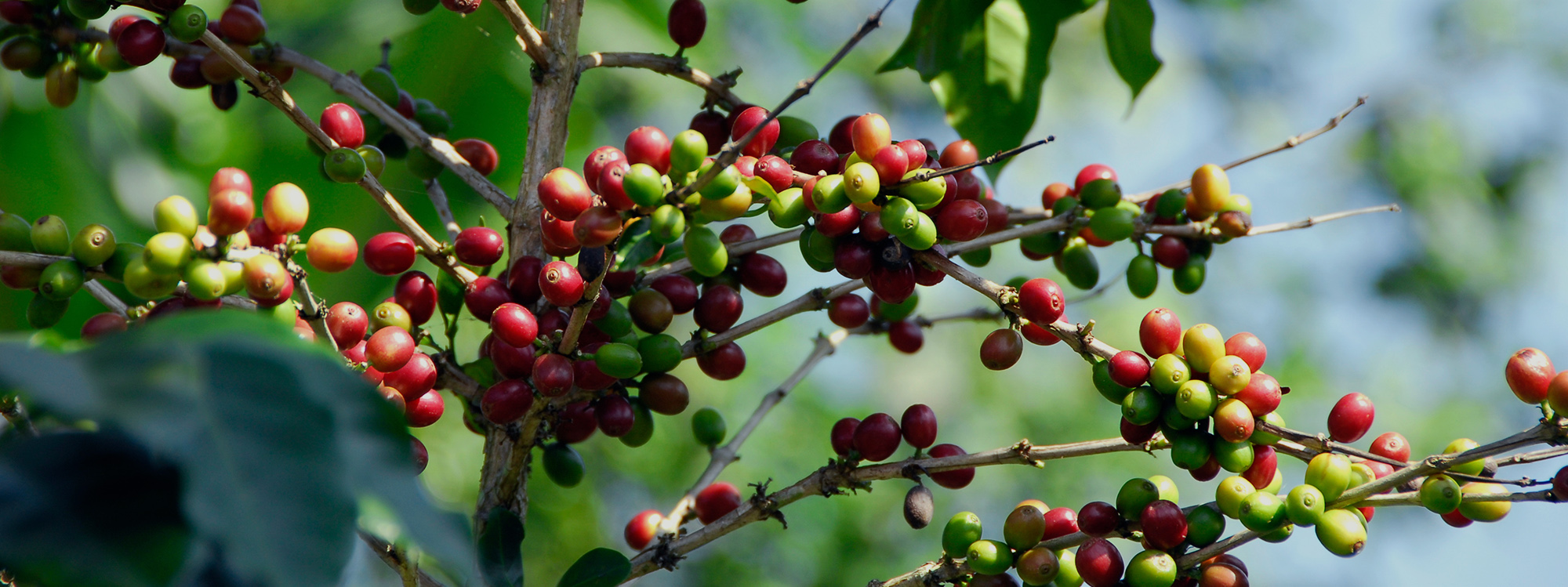
The Bolaven Plateau in southern Laos is an old volcano whose mineral-rich soil made the country’s coffee reputation. Arabica was introduced under French rule and now grows between 1,000 and 1,350 metres around Paksong. In the cup it is medium-bodied, low in acidity, with citrus, hazelnut and sometimes stone-fruit notes – a round, easy coffee that pleases almost everyone.
Buy it as whole beans rather than ground, and ideally on the plateau itself. The Bolaven Plateau Coffee Producers Cooperative brings together thousands of farming families across the Paksong, Laongam and Thateng districts, and several estates – Sinouk, Jhai Coffee, the farms around kilometre 40 – welcome visitors for a tasting. A kilo of beans costs a fraction of what a European roaster charges, and you will know exactly where it grew. It is one of the highlights of our southern Laos itineraries.
Same shelf, same suitcase: green tea from Phongsaly, picked from century-old tea trees in the far north, and black pepper from the south – less famous than its Cambodian neighbour, and very good.
Saa paper, bamboo and basketry
Saa paper is made from mulberry bark, beaten, diluted and dried in the sun on wooden frames – you can still see those frames lined up in the yards of Ban Xang Khong, just outside Luang Prabang. Notebooks, lampshades, lanterns, cards: light, inexpensive and unbreakable. One of the few souvenirs you can buy in quantity without paying for it in kilos.
Basketry is worth a look too. The tip khao, the small lidded basket in which Lao families keep sticky rice warm, is the most beautiful everyday object in the country and costs almost nothing. It is fragile, though – pack it in the middle of the case, wrapped in clothes.
Silver, jewellery and anything that looks old
Silver jewellery – Hmong bracelets, belts, buckles, ceremonial collars – is handsome and affordable, but the silver content varies enormously from one seller to the next. Ask to see a hallmark where there is one, and accept that an “antique” piece sold at the night market is almost always a good reproduction. That is not a problem in itself. It only becomes one if you pay antique prices for it.
The same caution applies to old coins, bronzes and religious objects: a confidently contemporary piece beats a doubtful antique that will cause you trouble at the airport. Which brings us to the important part.
What Lao customs will not let you take out
This is worth knowing before you open your wallet. Lao law protects national heritage, and antiques and Buddha images cannot leave the country freely. In practice, any archaeological, religious or heritage object considered old – broadly, fifty years or more – requires authorisation from the Ministry of Information, Culture and Tourism. Without that paperwork the item can be seized at departure, and a fine may follow.
The rule is not there to inconvenience visitors. It exists because hundreds of statues have vanished from Lao temples over the decades. In practice, buy anything contemporary and handmade with complete confidence – textiles, basketry, paper, recent ceramics, new jewellery, coffee. If a piece is presented to you as antique, ask where it came from and what documents come with it. If the seller stays vague, walk away.
Two more prohibitions, which are common sense as much as law: nothing taken from wild animals (ivory, shell, bone, skins, claws, snake liquor), and no undocumented precious hardwood.
Getting it all home
Allowances depend on where you land, so check your own country’s rules before you shop seriously. Travellers returning to the European Union by air may bring in up to 430 EUR of goods per person duty-free (150 EUR for under-15s); above that you must declare, and VAT then applies to the full value with no deduction. Allowances cannot be pooled between travellers for a single item.
Alcohol and tobacco are counted separately: 1 litre of spirits over 22% – which covers lao-lao, the local rice alcohol – plus 4 litres of wine, 16 litres of beer and 200 cigarettes. Enough for one bottle of infused lao-lao, not a crate.
One last practical note: keep your receipts, especially for valuable textiles, and seal coffee beans in an airtight bag. The smell gets into everything.
Buying in the right place
The difference between a souvenir and an object you keep for twenty years usually comes down to where you bought it. A weaving village where the loom is actually running, a plantation where you taste the coffee at source, a saa paper workshop on a dry-season morning: short visits, easy to build into an itinerary, and often the ones travellers talk about most afterwards. Our nature and culture journeys are designed around exactly these encounters.
Frequently asked questions
What is the best thing to buy in Laos?
Handwoven silk or cotton – a scarf, a pha biang or a sinh skirt. It is light, it lasts, and it carries a pattern specific to the region and the ethnic group that wove it. Bolaven Plateau coffee beans are the best edible souvenir.
Can I take a Buddha statue out of Laos?
Not freely. Antique Buddha images and heritage objects roughly fifty years old or more require authorisation from the Ministry of Information, Culture and Tourism, and may be seized at the airport without it. New, clearly contemporary pieces sold in craft shops are not the issue – old ones are.
How much does Lao silk cost?
It varies hugely with the quality of the thread, the dye and the hours of work. A simple handwoven scarf is an affordable gift; a ceremonial sinh that took a weaver weeks costs several hundred dollars, and it should. If a “silk” scarf costs the same as a coffee, it is not silk.
Where is the best place to shop in Laos?
Luang Prabang for textiles and saa paper, the Bolaven Plateau for coffee and tea, Vientiane’s Talat Sao for a bit of everything under one roof. Village workshops almost always beat markets on quality, and the money goes to the maker.
Planning a trip to Laos and want artisan workshops, markets and plantations built into it? Get in touch – we are a local agency based in Vientiane, we know these artisans personally, and we design every itinerary privately, at your own pace.