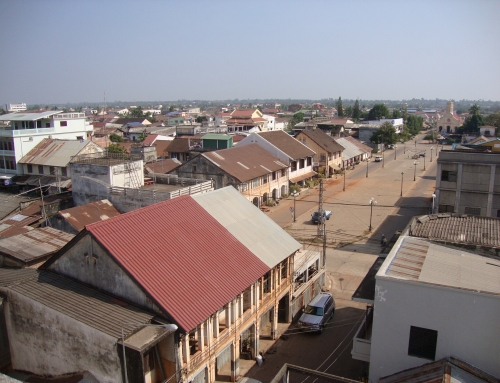

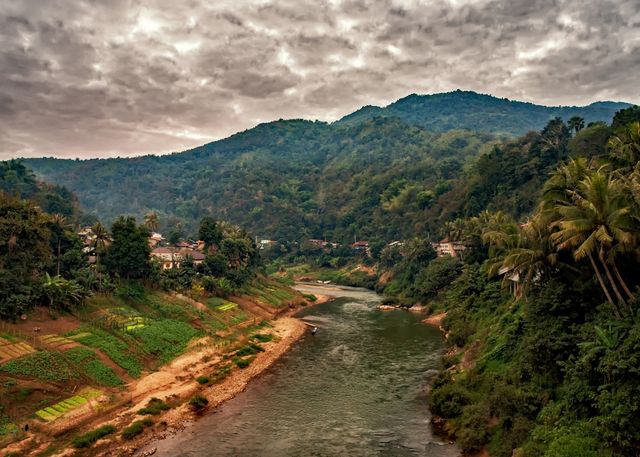
There is a corner of Laos that travellers almost never reach, and it is not for lack of beauty. It is for lack of road. Phongsaly is the northernmost province of the country, wedged between China and Vietnam, and its capital sits at 1,400 metres, the highest provincial town in Laos. People still weave there. They pick tea that grows on trees. And you can walk from one Akha village to the next without meeting anyone. Here is what to know before you commit, including what no longer works.
Where it is, and why so few people go
Phongsaly closes Laos off at the top. The province borders Yunnan to the north and Vietnam to the east, and is home to 28 ethnic groups: Khmu, Phunoy, several Akha branches, Tai Lue, Ho. It is one of the densest human mosaics in Southeast Asia.
The price of that richness is distance. From Luang Prabang, plan on two days of travel, not two hours. Nothing is hard. Everything is long. That is exactly what has kept the crowds away.
Getting there, and what no longer works
By road
The usual route runs through Oudomxay, with morning and early-afternoon departures and 10 to 12 hours of mountain driving. One recent change matters: direct buses all the way into Phongsaly town have stopped. You now change at Boun Neua and take a second bus for the last hour, so allow for the wait. From Muang Khua, further south, count about nine hours and 100,000 kip (roughly 4.50 USD) via Pak Nam Noy.
By boat on the Nam Ou

This is the journey travellers dream about, and this is where we have to be straight with you. The direct boat between Nong Khiaw and Muang Khua no longer exists: the dams built on the Nam Ou since 2017 cut it. What remains is a boat-and-road combination, with an overland transfer around the dam. Between Muang Khua and Phongsaly boats still run: eight to nine hours and around 120,000 kip (roughly 5.50 USD), again with a road section.
The good news is that the finest stretch, the Nam Ou run down from Muang Khua to Nong Khiaw, is still very much alive. It is the leg our northern trekking trips follow.
Flying: not for now
There is an airport at Boun Neua, an hour from Phongsaly, and a Vientiane service ran for years. The last scheduled flight on record is from April 2026 and the route has been inactive since. Do not build an itinerary on it. Check first, and plan for the road.
Trekking: one to four days with the Akha and the Phunoy
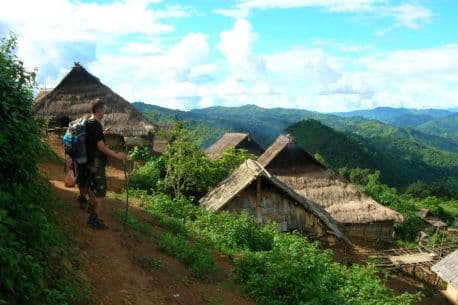
This is the real reason to come. The provincial tourism office in Phongsaly runs treks of one to four days to Akha and Phunoy villages with a small team of trained local guides. In the Muang Khua district, walks run from two to six days, all of moderate difficulty, alternating forest and villages.
As a benchmark, the tourism office’s three-day Akha Country Trek runs from 400,000 kip per person per day for a single walker down to 185,000 kip in a group of eight — roughly 18 USD to 8 USD a day. That includes an English-speaking guide, water, seven meals, two nights in village homestays, two Akha massages and the contribution paid to the villages. The more of you there are, the cheaper it gets, which is the opposite of what most people expect.
What a village night looks like
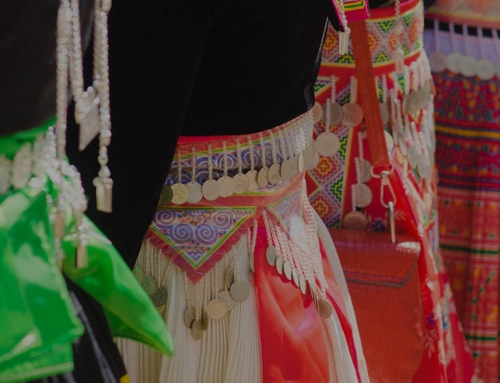
Low stilted houses, Akha headdresses sewn with silver coins, black pigs under the floor, sticky rice and a corn spirit you will be poured without being asked. No hot shower, no signal, a mat on the floor. The travellers who come back from Phongsaly delighted are the ones who were told all this beforehand.
What to bring
Closed shoes, a head torch, a light sleeping bag in December and January, cash — there is no reliable ATM beyond the town — and patience. A local guide is not a comfort upgrade: he is the person allowed into the village, and the person who knows what is done and what is not.
Tea that grows on trees
Eighteen kilometres from town, the Phunoy village of Ban Komaen grows tea that specialists rank among the oldest in the world. The eldest plants are genuine six-metre trees with trunks 30 centimetres across, their roots deep in mineral-rich soil. That is where the very particular taste of Phongsaly tea comes from, rolled on the spot into small cigars.
You will hear the figure 400 years. To be accurate: nobody has established it, and a good deal of legend has grown around these trees. What is certain is that they are tea trees, grown without chemicals, and that the big neighbour to the north pays dearly for the crop.
The town: old quarter, market, Phou Fa
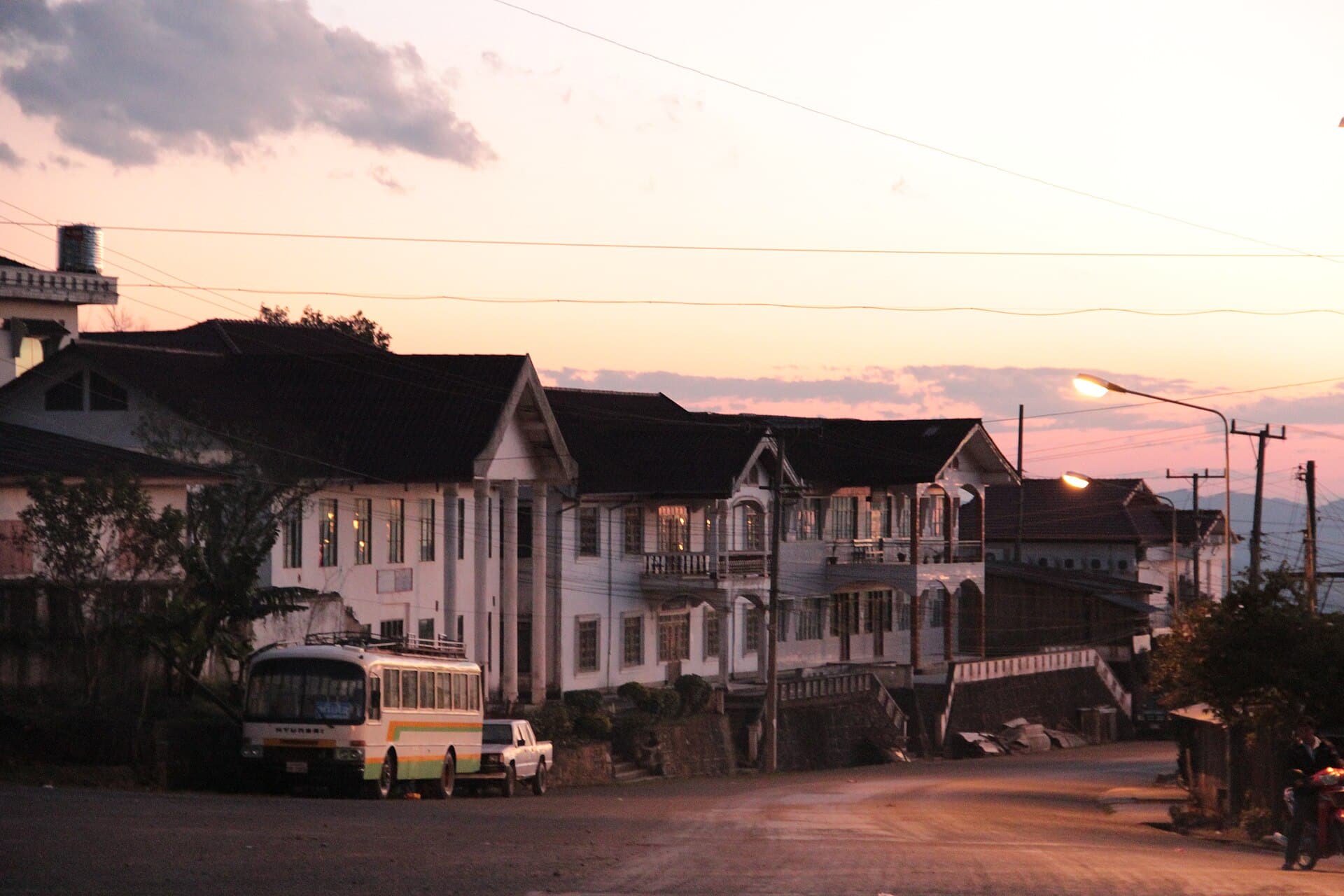
A street in Phongsaly — photo by GuillaumeG (Guillaume Goursat), CC BY-SA 3.0
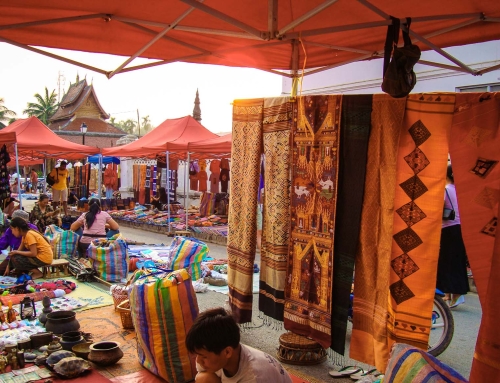
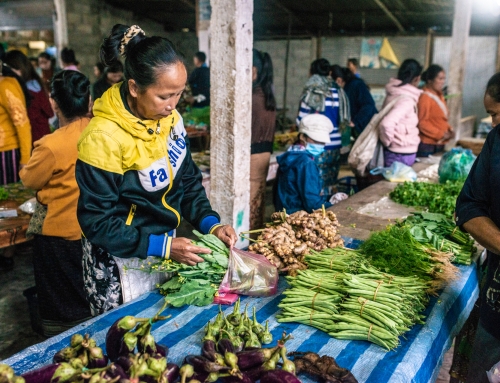
Phongsaly will not take you a week, but it deserves a day. The old quarter keeps wooden houses built by Yunnanese traders, the morning market draws the ethnic groups of the surrounding valleys, and the climb up Phou Fa, at 1,625 metres, takes about 45 minutes for a stupa and a view over the whole basin. Sunrise or sunset is the hour to do it.
When to go
The window is clear: November to February. Dry air, clean skies, and daytime temperatures between 15 and 22 °C (59-72 °F), which is the right range for walking. In exchange, winter nights fall close to freezing at 1,400 metres, and the town has a reputation for four seasons in a single day. March and April stay walkable but the slash-and-burn haze thickens. From June to September, mountain tracks are a gamble.
Frequently asked questions
How do I get to Phongsaly from Luang Prabang?
There is no quick way. Allow two days: north to Nong Khiaw or Oudomxay on day one, then either the Oudomxay road with a change at Boun Neua, or the Nam Ou boat to Muang Khua followed by the road. The Vientiane flight to Boun Neua has been inactive since April 2026, so do not count on it.
Is Phongsaly worth the journey?
If you want trekking in villages that still live their own life, and you have at least twelve days in Laos, yes. If you have ten days and want Luang Prabang, Vang Vieng and the south as well, no — keep it for a second trip.
Can I trek in Phongsaly without a guide?
You should not. Village visits go through the provincial tourism office or a local operator, and the guide is what makes you a guest rather than an intruder. Treks run from one to four days from Phongsaly town, two to six days out of Muang Khua.
When is the best time to trek in Phongsaly?
November to February: dry, clear and cool, 15 to 22 °C by day. Bring a warm layer, because nights at 1,400 metres drop close to freezing.
Planning it with us
Phongsaly is in none of our published itineraries, and that is deliberate: the province works as an extension to a trip already built, because those travel times have to be absorbed elsewhere. The natural base is the north. Our Trek and Immersion in Northern Laos, 12 days, boards at Muang Khua to come down the Nam Ou, and Charm and Authenticity of Northern Laos runs through Nong Khiaw and Muang Ngoi, where you pick a hotel by the river before heading further north. Tell us how many days you have and what pace you keep, and we will answer within one working day from Vientiane — and tell you honestly whether Phongsaly fits this trip or belongs to the next one. Let’s talk.