
Laos was once called Lan Xang, the kingdom of a million elephants. The name dates back to the 14th century and it still sounds wonderful, but it no longer describes anything real: around 1,500 Asian elephants are thought to be left in the country today, of which about 560 live with a mahout (figures checked in late October 2026, and best treated as an order of magnitude: counting elephants in a forest is always an estimate).
That is not many. Which is exactly why the question “where can I see elephants in Laos?” deserves better than a brochure answer. Here is ours, from an agency based in Vientiane, with what we know, what we do not promise, and the one rule we never bend: observation only, never riding, never a show.
Why we stopped offering elephant rides
Fifteen years ago, an elephant ride was in every Laos itinerary, including ours. It is in none of them now. The reason is simple: an elephant’s back is not built to carry a wooden saddle and two adults for hours a day, and the training that makes that docility possible is not teaching, it is submission.
Elephants coming out of logging work, where they hauled timber for years, arrive already worn down. Putting them back to work standing under a platform is the same job under another name. Every serious centre in Laos has travelled the same road we did, at its own pace: they stopped.
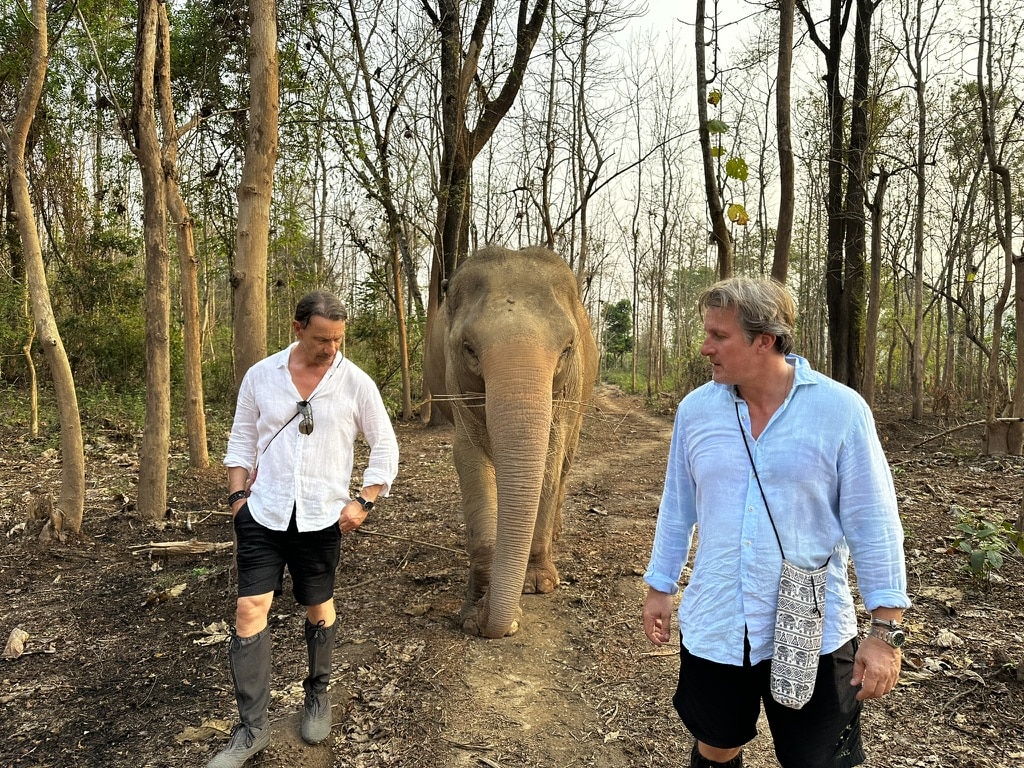
What we offer instead comes down to two words: walking alongside. You follow the herd through the forest or along the river, at a distance, with the mahout explaining his animal. It is slower, it photographs less well, and it is far more interesting.
The two places that really matter
Laos does not have ten credible centres. It has two whose practices are publicly documented, and they do not do the same thing.
Sayaboury, in the west: the conservation centre
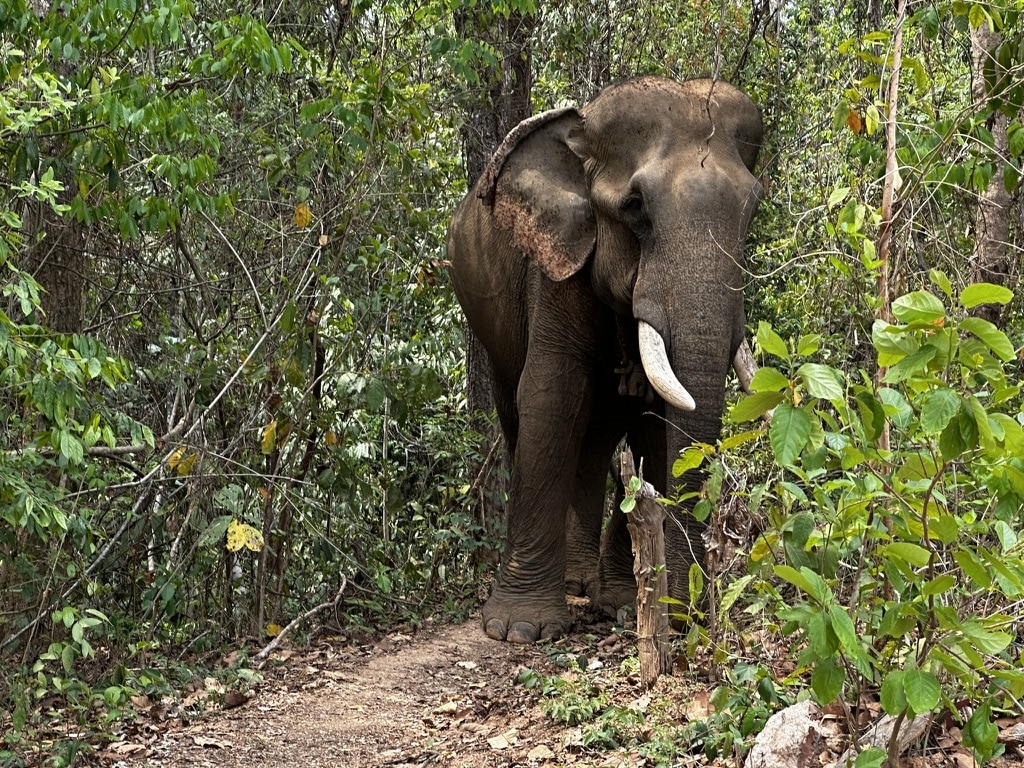
Sayaboury (Xayaboury) holds the largest population of domesticated elephants in the country, and it is there, on the shore of Nam Tien lake, that the conservation centre is based. Around thirty elephants live there, and above all it is the site of the only elephant hospital in Laos, and of the first breeding and release programmes ever run in the country.
The visit is austere in the best sense: no physical contact, no riding, each elephant stays with its mahout. You watch, you listen, you understand how a three-tonne animal is cared for. Stays are counted in days rather than hours, and you have to accept that you are going there to learn more than to touch.
Near Luang Prabang: the forest walk
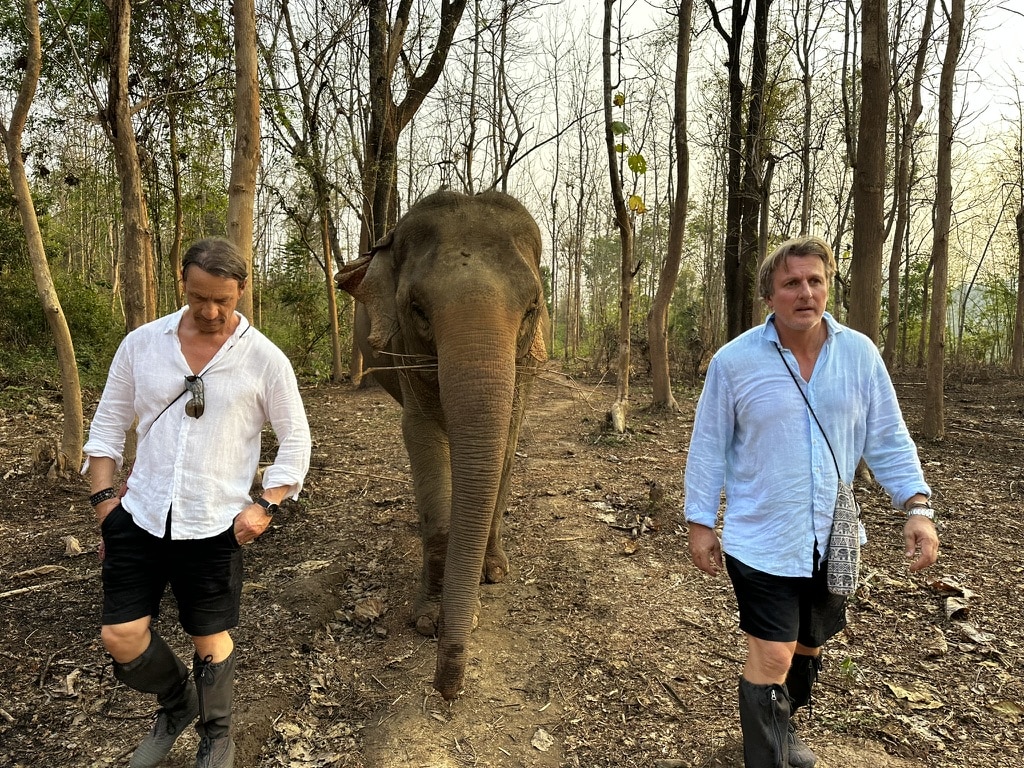
Half an hour from Luang Prabang, a second centre is home to nine elephants, most of them retired from logging and from riding tourism. The principle is a walking visit with no riding, over half a day, which makes it compatible with a normal Luang Prabang stay, unlike Sayaboury.
In September 2026, this centre launched a joint veterinary care programme with an Indian partner, including a rapid response team based in Luang Prabang. It is the kind of news that makes no noise but counts: an injured elephant in a northern province now has a chance of being treated.
Five questions to ask before you book, anywhere
Practices change, owners change, and a centre that was beyond reproach three years ago may have slipped. We re-check our partners before every season. If you are organising on your own, these five questions sort things out quickly:
- Is there riding, in any form at all? Including “just ten minutes”, including “bareback”, including “for the bath”. The right answer is no.
- Is there a show? Tricks, painting, football, costume parade: if the elephant is doing something an elephant does not do by itself, it was trained for it.
- Can you bathe with the elephants? The most advanced centres have dropped the shared bath. Twenty visitors in the water is stress for the animal, not a cuddle. A centre that gave it up has thought about what it is doing.
- Does each elephant have its own mahout, and is he employed by the centre? A mahout who stays with the same animal for years is the foundation of good care. A day labourer is not.
- Is there a vet, and what happens to an elephant too old to receive visitors? The answer to that last question tells you everything about the rest.
What about wild elephants?
A few hundred remain free, in protected areas of central and western Laos. We put them in no programme at all, and we would advise you to walk away from any agency that promises you will see one: a wild elephant in a Lao forest is met by luck, not by appointment. What you can see are tracks, crossing areas, damage in a plantation, and that is already a great deal when a ranger is the one telling the story.
When to come
The right window is the cool dry season, from November to February: forest tracks are passable, the days are mild, and the elephants are not suffering from the March-April heat.
There is also a date to know: the Sayaboury elephant festival. The 19th edition ran from 9 to 16 February 2026, with the official opening on 14 February and fifty elephants gathered for the fiftieth anniversary of national day. The 20th edition is expected in mid-February 2027; exact dates are only announced a few weeks beforehand, and we confirm them to our travellers as soon as they are out. If the idea appeals to you, book accommodation in Sayaboury very early: the town is small.
How we fit it into a trip
Two ways, depending on the time you have.
The walking visit near Luang Prabang slots into a northern circuit without breaking anything: it takes half a day, between the temples of the town and the departure towards the valleys. It sits naturally alongside our Charm and Authenticity of Northern Laos, twelve days between Luang Prabang, the Mekong and the villages of the north.
Sayaboury is a different commitment: it takes two to three days on site and a road journey from Luang Prabang. We prefer to graft it onto a longer itinerary, such as Nature and Culture in Laos, thirteen days from north to south, where one stage can be moved without unbalancing the whole trip.
If you do not yet know how many days you will spend in Luang Prabang, our guide on what to do in Luang Prabang will help you frame the rest of the stay before you decide.
Frequently asked questions
Can you ride elephants in Laos?
You still can, in a handful of places, but you should not, and we no longer organise it. Carrying a saddle and two adults damages an elephant’s back over time, and the training behind it is coercive. The serious centres in Laos have all ended riding; walking visits have replaced it.
Where is the best elephant sanctuary in Laos?
Two sites have publicly documented practices: the conservation centre at Sayaboury, with the country’s only elephant hospital and no physical contact at all, and a nine-elephant centre half an hour from Luang Prabang offering a half-day walking visit. Which one suits you depends on how many days you have. We check the practices of our partners again before every season.
How many elephants are left in Laos?
Around 1,500 Asian elephants, of which about 560 live with a mahout (late October 2026). Wild elephant counts are estimates, so treat the figure as an order of magnitude rather than a census.
When is the Elephant Festival in Laos?
In Sayaboury, in February. The 19th edition ran from 9 to 16 February 2026. The 20th is expected in mid-February 2027, with exact dates usually announced only a few weeks in advance.
Tell us what you are looking for
A half-day forest walk and a genuine conservation centre do not suit the same traveller, and neither is decided on a blog page. Write to us with what you have in mind, your dates, the time you have, what matters to you, and we will tell you honestly what works and what does not.
Tell us about your project: first reply within 24 working hours, a detailed proposal within 48 working hours once we have the information we need. We are based in Vientiane, and we go and see these elephants ourselves.