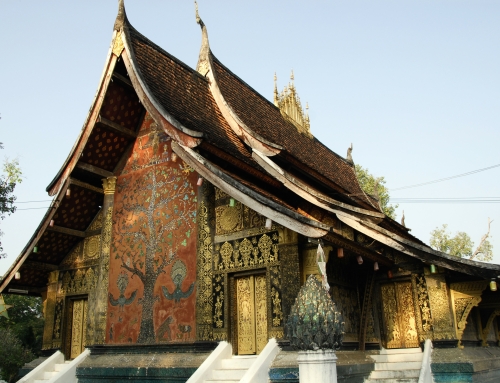

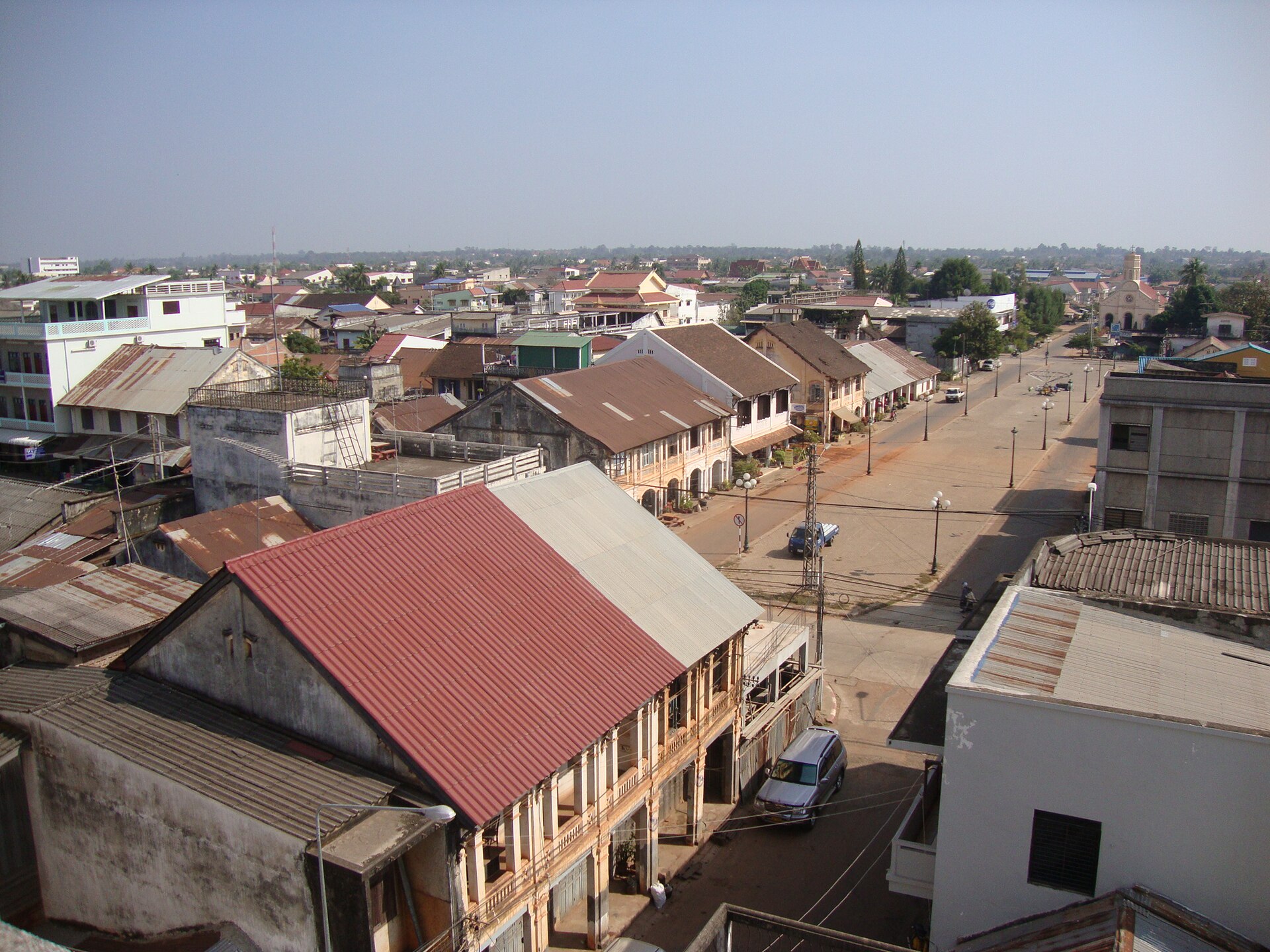
For years, Savannakhet was little more than a stopover: travellers crossed the Mekong to Thailand, got their passport stamped, and moved on. That was a mistake. Laos’ second city, set on the left bank of the river, is enjoying a quiet revival — and it offers something rare in Southeast Asia: an almost intact historic centre, where you can stroll on foot past colonial villas, art deco façades and traditional Lao houses.
A heritage unique in Laos
Nearly 200 remarkable buildings have been preserved in old Savannakhet. The historic quarter is compact — roughly 1.7 km by 400 m — and is best explored on foot, eyes up. Architecture lovers will happily lose hours here: weathered colonial mansions, pre-war Chinese shophouses, and a trail of murals and street art that gives the district a surprisingly creative energy. The town feels frozen in time and buzzing all at once.
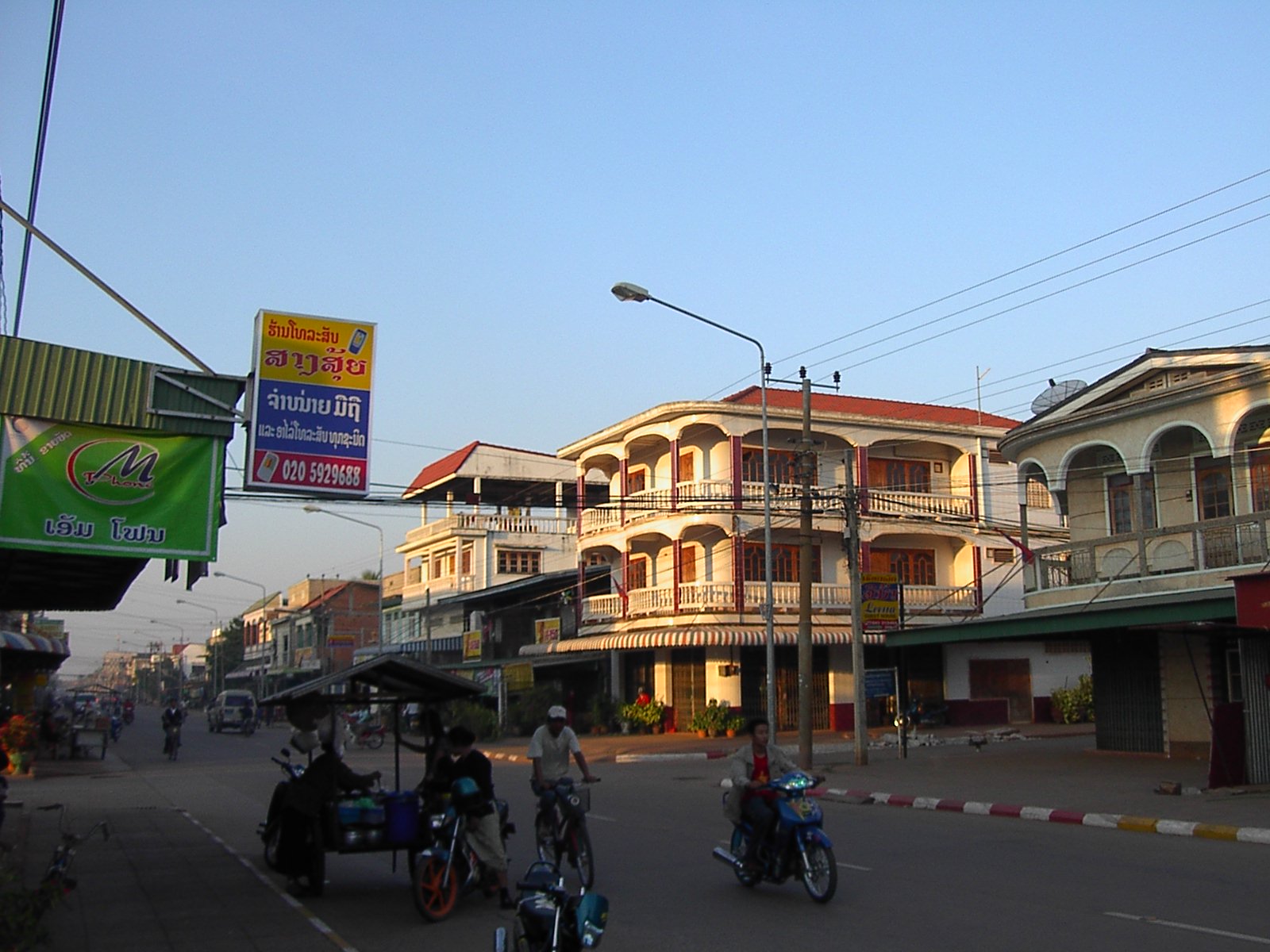
Façades of Savannakhet’s historic centre (photo Wikimedia Commons, public domain)
The beating heart: Talat Yen and around
The centre of gravity of the old town is Talat Yen Plaza, the former night market. In the late afternoon, the great open space running down towards the Mekong comes alive: the evening market sets up from 5 to 10 pm, and it is one of the best places in Laos to sample street food among local families.
All around stand the town’s historical landmarks: Saint Theresa’s Church, built in the 1920s and now the emblem of the quarter; Vat Sayaphoum, Savannakhet’s oldest Buddhist temple, founded in 1642 on the riverbank; the Vietnamese and Chinese temples, reminders of the trading boom of the 1920s-30s; and the birthplace of Kaysone Phomvihane, a key figure of modern Laos.
Cinemas from another era
One of Savannakhet’s most touching curiosities is its vintage cinemas. The Laochaleun, an elegant 1930s art deco building, has kept its soul through the decades — a renovation project aims to bring its screen and a restaurant back to life. A few streets away, the Khounsavanh (formerly the Nang Lit cinema) ran for years as an open-air cinema before the province took it over. Timeless places, perfect for photographers.
Dinosaurs on the banks of the Mekong
Few travellers know it: Savannakhet province is one of Southeast Asia’s great dinosaur territories. Numerous fossil remains were discovered here in the 20th century, including those of Ichthyovenator laosensis, a genuinely Lao spinosaurid. The city’s small dinosaur museum, modest but fascinating, tells this story going back more than 100 million years.
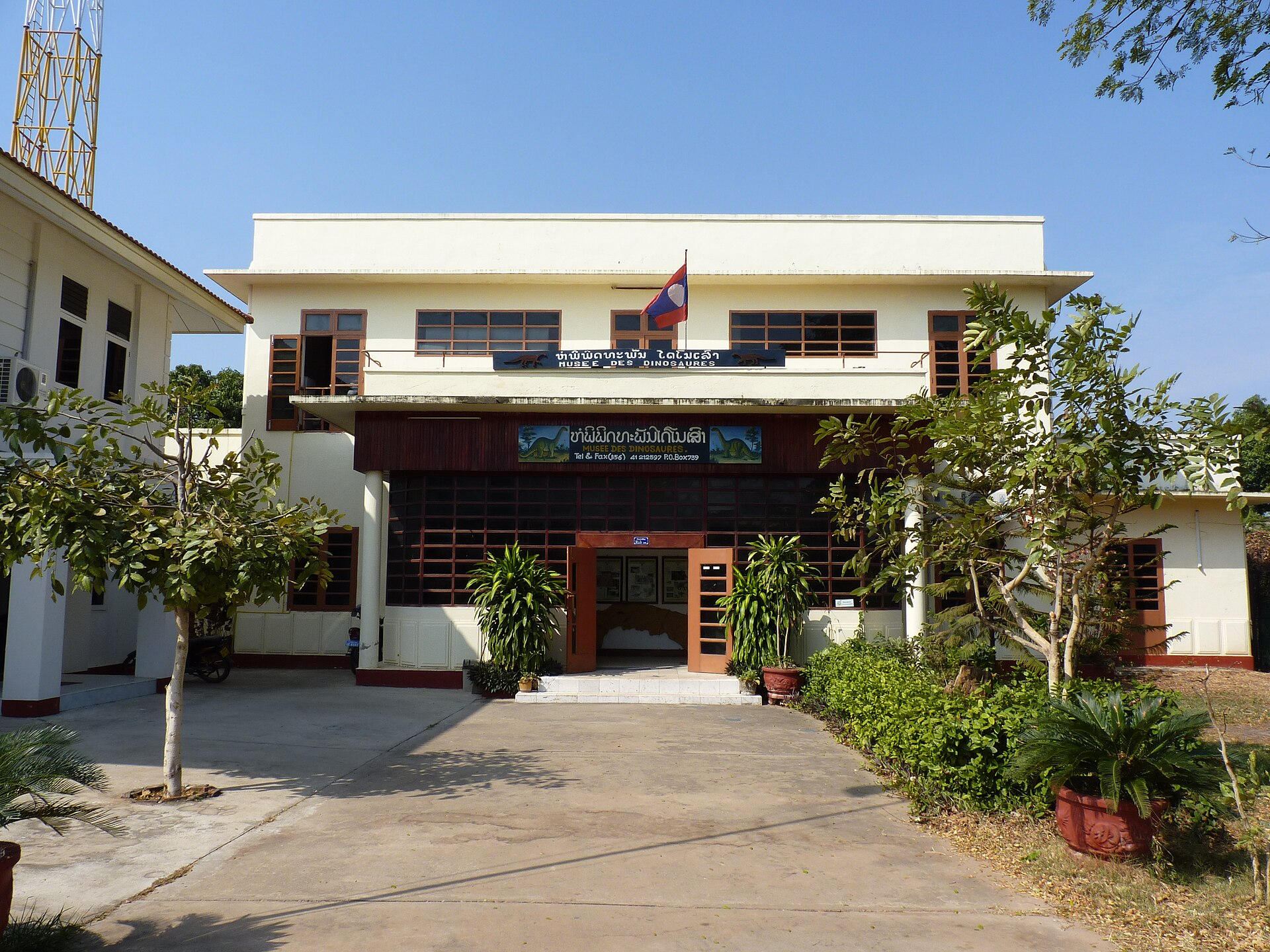
The Savannakhet dinosaur museum (© Adriaan Castermans, Wikimedia Commons, CC BY-SA 3.0)
The Mekong riverfront
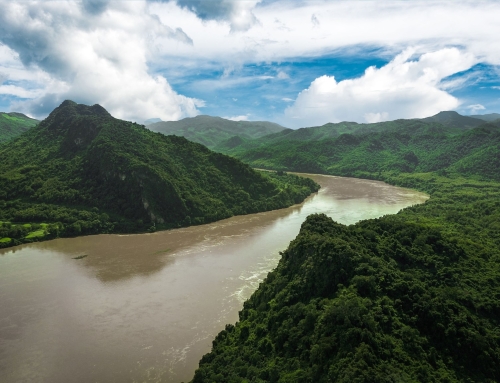
Redeveloped in recent years, the riverside promenade has become the town’s social hub: exercise at sunset, drinks facing Thailand, offerings to the great Naga revered by Lao and Thai people on both banks. Waterside restaurants serve Mekong fish and cold beer — hard to imagine a better way to end the day.
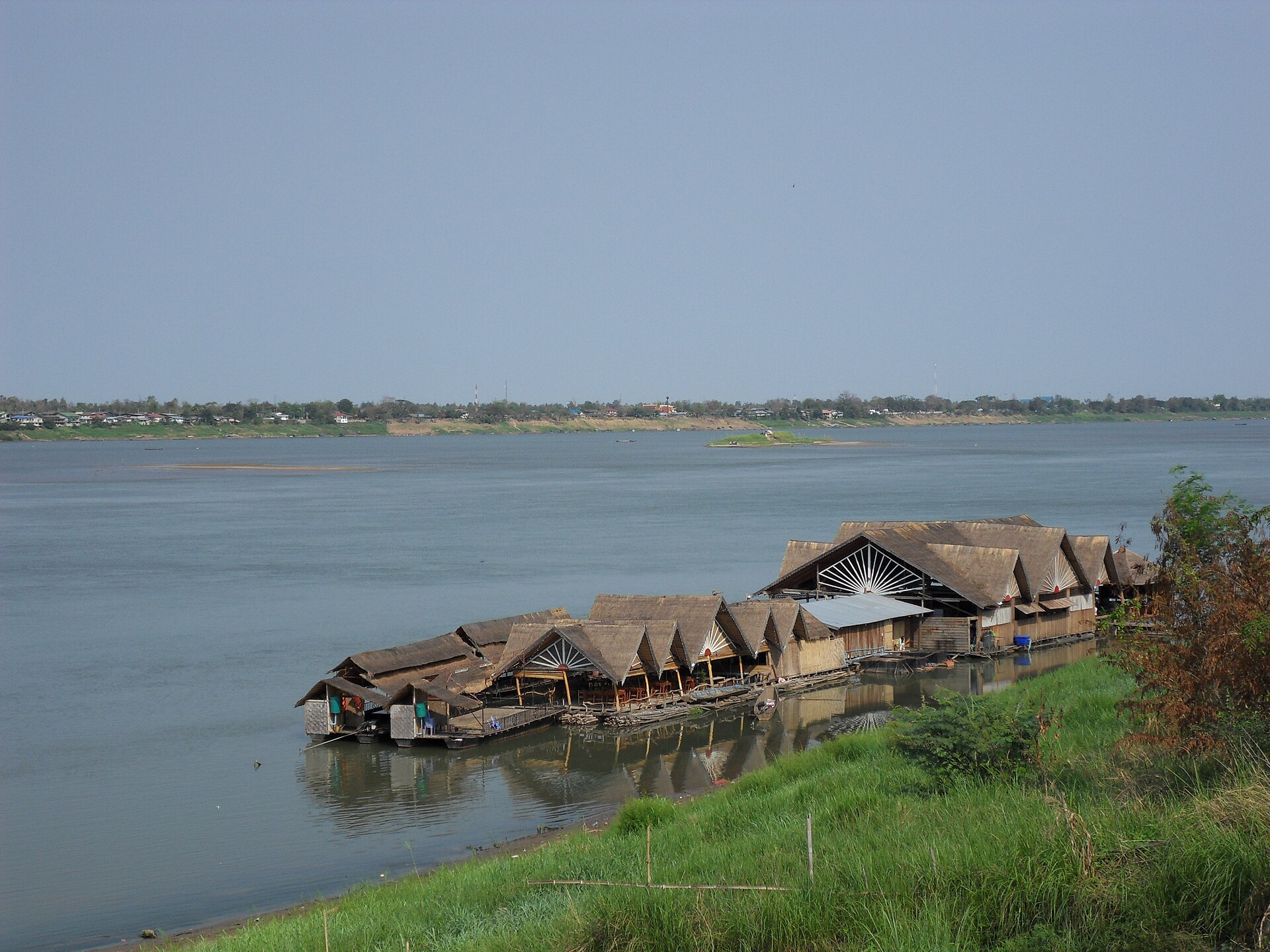
The banks of the Mekong at Savannakhet (© Chaoborus, Wikimedia Commons, CC BY-SA 3.0)
Beyond town: That Ing Hang and the rice fields
Twelve kilometres northeast of the city stands That Ing Hang, one of the most sacred stupas in Laos. Tradition traces its origins back to 307 BC, and it was restored in the 16th century; its great annual festival in December draws thousands of Lao and Thai pilgrims. On the way, Beung Va Lake offers an immersion in the province’s rural, rice-growing life.
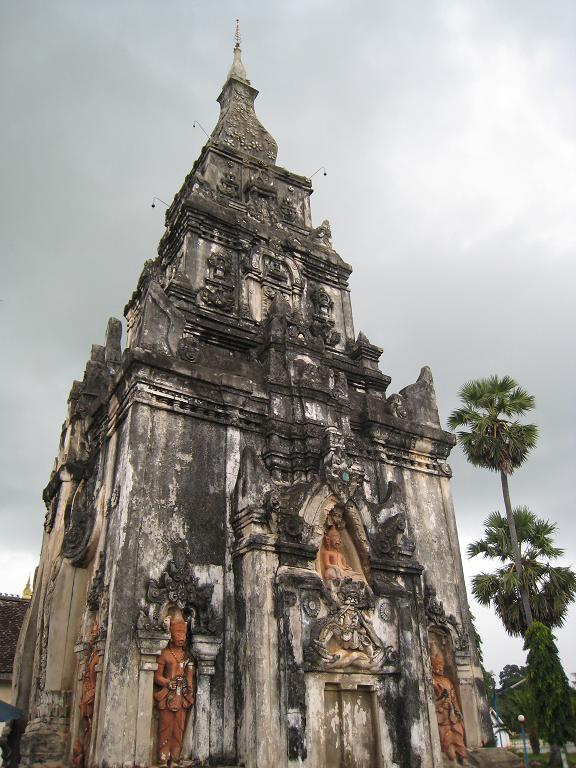
That Ing Hang stupa (© Jon Jenkins, Wikimedia Commons, CC BY-SA 1.0)
The more curious can carry on along the Xe Champhone loop — a monkey forest, a turtle lake, a library of palm-leaf manuscripts… — a one-to-two-day escape that deserves an article of its own. Stay tuned!
Savannakhet with Asia Safari
Savannakhet fits perfectly into a journey through southern Laos, between Vientiane, the Bolaven Plateau and the 4,000 Islands. Tempted to stop over? Write to us — a local agency in Laos since 2002, we create your tailor-made journey.
Cover photo and colonial street: Wikimedia Commons (public domain).