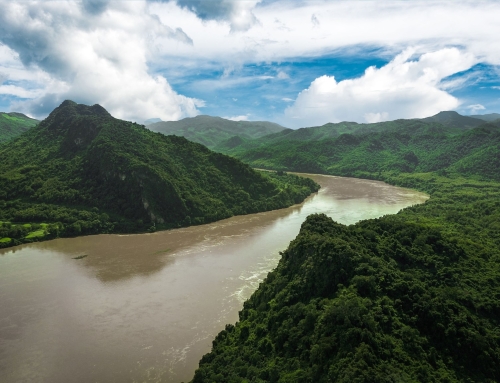

In the heart of Southern Laos, at approximately 1,200 meters altitude, the Bolaven Plateau is one of the most authentic and wildest regions in the country. Morning mists, endless coffee plantations, monumental waterfalls and ancient ethnic villages—the Bolaven offers another side of Laos, far from the beaten paths of Luang Prabang.
The Bolaven Plateau: A Highland Territory
Formed millions of years ago by a volcanic eruption, the Bolaven Plateau extends over approximately 10,000 km² across the provinces of Champassak, Salavan, Xekong and Attapeu. Its average altitude of 800 to 1,300 meters gives it a cool and humid climate, very different from the heat of the Mekong plains—and conducive to exceptional agriculture.
The Xe Pian, Xe Kong and Xe Bangfai rivers originate on the plateau, feeding the spectacular waterfalls that have made its reputation. It is this abundant water, combined with rich volcanic soils, that has made the Bolaven the coffee granary of Laos.
Bolaven Coffee: Laos’ Green Gold
Laos is one of the few Southeast Asian countries to produce quality Arabica coffee. The Bolaven is its heart: the first coffee plants were introduced by the French at the end of the 19th century, and the tradition has continued ever since. Today, Lao families mainly cultivate two varieties: Arabica, planted at altitude (800-1,200 m), with delicate and fragrant beans, and Robusta, more robust, grown in lower areas.
A visit to a coffee plantation is essential on the plateau. You’ll learn about the complete cycle: from cultivation to hand-picking (November-December), to wet or dry processing, through to artisanal roasting. And you finish with a tasting. Bolaven coffee, slightly sweet and not very bitter, bears little resemblance to what you find in supermarkets in France. In Tat Lo and Paksong, several coffee houses offer visits and training.
Bolaven Waterfalls
Waterfalls are the plateau’s other major attraction. Water, abundant year-round thanks to monsoon rains, creates impressive cascades in dense tropical forest landscapes.
Tat Lo
The Tat Lo waterfall, 80 km from Pakse, is the most accessible and best known on the plateau. In reality, “Tat Lo” refers to a set of three successive waterfalls on the Xe Seset River. The main one, wide and powerful during the rainy season, can be crossed on foot in the dry season. The village of Tat Lo, with its guesthouses and riverside restaurants, is the ideal base for exploring the plateau.
Tat Fane
Among the most beautiful waterfalls in Laos, Tat Fane plunges 120 meters into a wooded canyon approximately 40 km from Pakse. The view from the observation platform, with the twin falls dropping side by side, is striking—especially in the morning, when clouds play with the light. Not to be missed.
Tad Yuang and Other Waterfalls
Less known than Tat Fane but equally spectacular, Tad Yuang is a 40-meter waterfall surrounded by lush vegetation. The slightly more complex access guarantees a wild atmosphere. For travelers wishing to get away from frequented trails, the Tat Gneuang and Tat Champi waterfalls are also worth the detour, especially during the rainy season when their flow is at maximum.
Ethnic Groups of the Bolaven Plateau
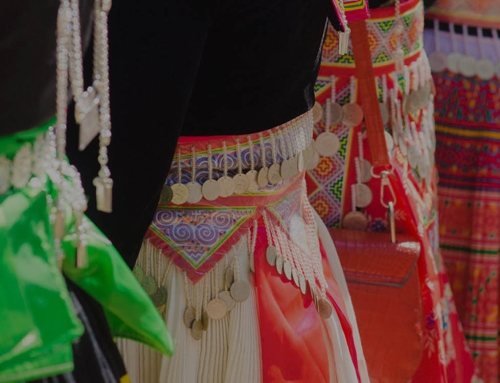
What makes the Bolaven unique in Laos is the richness of its ethnic communities. Unlike the Buddhist Lao of the plains, the Bolaven ethnic groups are primarily animist and maintain remarkably well-preserved ancestral traditions.
The Katu are recognizable by their tattoos and costumes adorned with beads. The Alak and Nge are two Mon-Khmer groups inhabiting villages around Tat Lo and Salavan. The Laven constitute the plateau’s majority group—it is from them that the name “Boloven” (“plateau of the Laven”) comes. A night in an ethnic village is often described by our travelers as one of the most intense moments of their stay in Laos.
How to Access the Bolaven Plateau
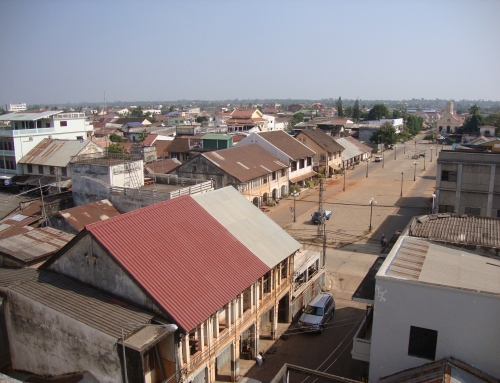
The logical starting point is Pakse, the capital of Champassak province, accessible by plane from Vientiane (1h, daily Lao Airlines flights), by bus from Vientiane (12-14h) or from Si Phan Don (3h). From Pakse, two main options are available: motorcycle or scooter (recommended for independent travelers wishing to follow the famous Bolaven Loop), or private vehicle with driver—an option Asia Safari recommends for families or groups seeking personalized local guidance.
When to Visit the Bolaven Plateau?
The dry season (November to May) is ideal for village visits, trekking and motorcycle tours. Roads are passable everywhere and the climate pleasant. The rainy season (June to October) sees waterfalls at their most spectacular level—a grandiose spectacle—but some mountain tracks can become difficult to access. If you wish to participate in the coffee harvest, plan your visit in November-December.
The Bolaven Loop: The Classic 4-Day Itinerary
The Bolaven loop is one of the most renowned motorcycle circuits in Southeast Asia. Here is an overview from Pakse: the first day takes you to Tat Fane, Tad Yuang and Paksong (overnight); the second day crosses coffee plantations and Katu villages to Tat Lo (overnight); the third day runs along Salavan and Tad Xay before descending back to Pakse; a fourth day can be added to explore the Alak and Nge villages of Xekong province.
Asia Safari incorporates the Bolaven Plateau into its tailor-made Laos tours, with local guide and comfortable private vehicle. Our teams know the most authentic ethnic villages—those that appear in no guidebook.
Going Further
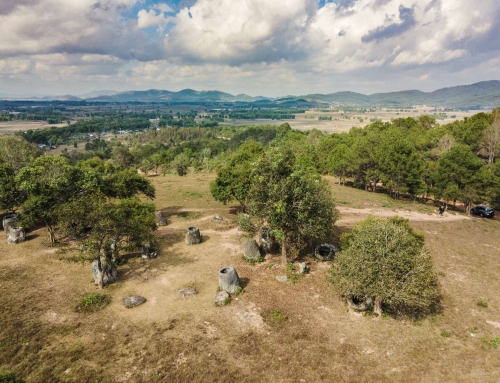
Combine your visit to the Bolaven Plateau with the other wonders of Southern Laos: Pakse and the temples of Champassak, the 4,000 islands of Si Phan Don. For a complete tour of the country, head north to the Plain of Jars or the must-sees of Luang Prabang. And to plan your trip in detail, consult our 2-week Laos itinerary.