
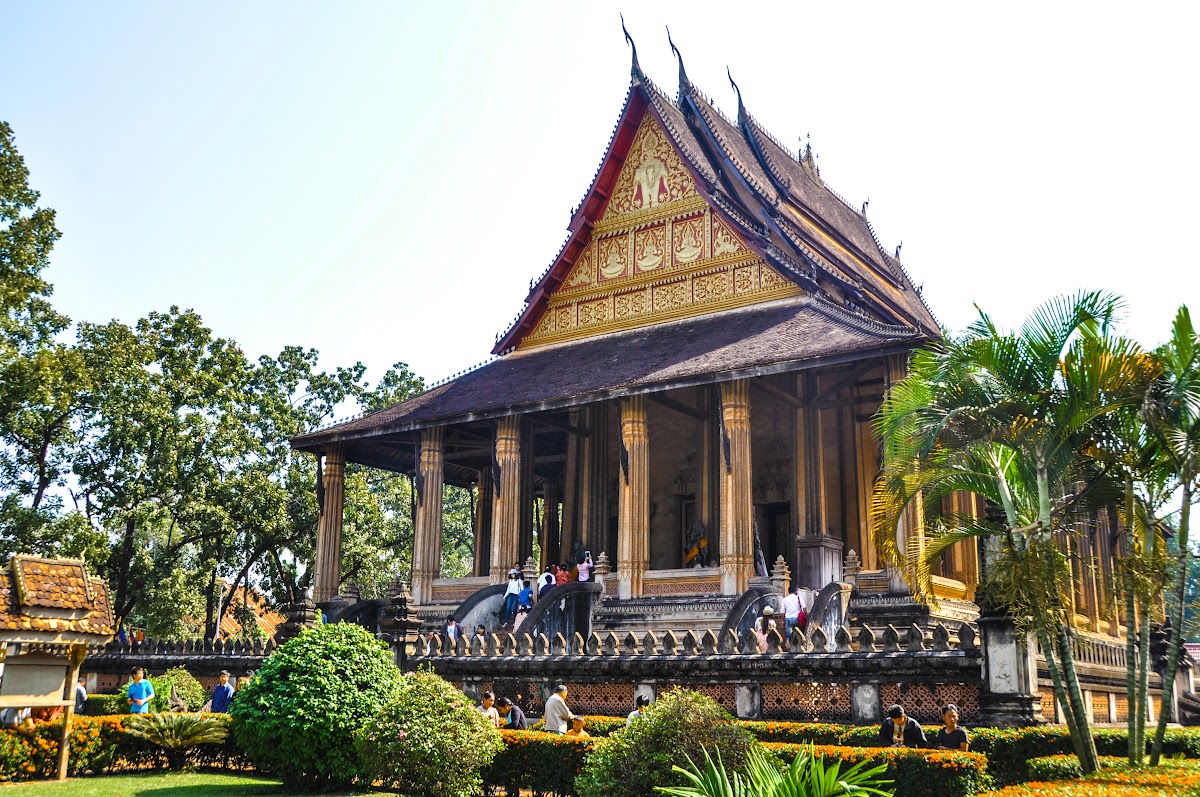
Luang Prabang boasts over 30 Buddhist temples — known as wats — within its peninsula alone, which is entirely designated a UNESCO World Heritage site. These sanctuaries, with their gilded facades and cascading red and gold roofs, form the spiritual and architectural heart of the city. Here is a guide to the essential temples of Luang Prabang.
Wat Xieng Thong: The Crown Jewel
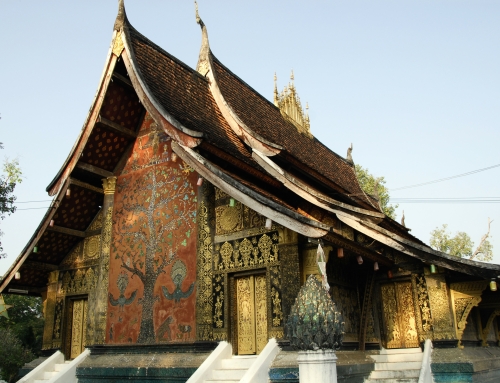
Built in 1559, Wat Xieng Thong (“Temple of the Golden City”) is the most beautiful and important temple in Luang Prabang. Located at the tip of the peninsula at the confluence of the Mekong and Nam Khan rivers, it is recognizable by its cascading roof that almost reaches the ground. The interior houses finely crafted stucco work and a royal funerary chapel adorned with colorful glass mosaics. Don’t miss the “red chapel” (Ho Tai) with its mosaics depicting scenes of daily Laotian life — a marvel of decorative art.
Wat Mai Suwannaphumaham: The Golden Reliefs
Adjacent to the Royal Palace, Wat Mai is one of the more recent temples (18th century) but also one of the most impressive due to the richness of its ornamentation. Its facade is adorned with gilded reliefs in five registers depicting the life of Buddha and scenes from the Ramayana. This temple serves as the residence for Luang Prabang’s highest Buddhist dignitary.
Wat Visoun and That Makmo
Wat Visoun is the oldest standing temple in Luang Prabang (1513). Its lotus-bud-shaped stupa, nicknamed That Makmo (“the watermelon stupa”), is an iconic symbol of the city. The interior houses important collections of gold and silver Buddha statues.
Wat Aham and Wat That
These two neighboring temples, often overlooked by hurried tourists, are worth a visit for their serene atmosphere. Wat Aham is surrounded by sacred ancient trees and hosts animist rituals still practiced today. Wat That, with its large white stupa, marks the entrance to the historic district.
The Tak Bat Ceremony: Monks at Dawn
Every morning at dawn (5:30–6:00 AM), hundreds of saffron-robed monks walk through the streets of Luang Prabang in a silent procession to receive offerings of sticky rice from the faithful. This is the tak bat, one of the most moving and photographed experiences in all of Southeast Asia. Please observe the rules: dress modestly, remain silent, and do not disturb the ceremony with flashes or by approaching the monks too closely.
Tips for Visiting the Temples of Luang Prabang
- Attire: Shoulders and knees must be covered in all temples
- Hours: Most temples are open from 8 AM to 5 PM, with a break at noon
- Admission: Most are free or have a modest entrance fee (20,000 to 50,000 KIP)
- Best Light: Early morning or late afternoon for photos
- Local Guide: A local guide significantly enhances the visit — Buddhist history and iconography are complex and fascinating
Visiting Temples with Asia Safari
Our local guides in Luang Prabang know the history and legends of each temple. In our tours, we include a dedicated temple day with a local guide — to understand the meaning of the rites, statues, and Lao Theravada Buddhist architecture. Discover our Luang Prabang tour or contact us to customize your visit.
Also read: Understanding Theravada Buddhism in Laos · History of Luang Prabang · Complete Guide to the Temples of Luang Prabang
Prepare your visit to the temples of Luang Prabang. Asia Safari accompanies you on-site with our 15-day Laos tour or a fully personalized tailor-made trip to Laos.