
Few statues in the world have given their name to a city. The Phra Bang, the “Holy Buddha of Fine Gold”, is one of them: it turned the ancient Muong Soua into Luang Prabang, “the city of the Great Phra Bang”. Palladium of the kingdom — the sacred protector of the whole country — this gilded bronze Buddha has crossed seven centuries of Lao history, known exile, two captures by Siam and countless relocations. Here is its story, the one we tell our travellers in front of the National Museum of Luang Prabang.
A statue from Ceylon
The Phra Bang is a standing Buddha, both hands raised palms forward in the attitude known as “Ham Nhat” — “calming the family quarrel”, a variant of the abhaya mudra, the gesture of reassurance. The statue is 83 centimetres tall and weighs 43.4 kilograms of gilded bronze. According to tradition, it was cast in Ceylon (today’s Sri Lanka) around the 8th or 9th century, before reaching Cambodia around the 11th century, most likely as a royal gift between sovereigns.
1358: the Khmer king’s gift to Fa Ngoum
The Lao story of the Phra Bang begins in 1358, when the Khmer sovereign presented the statue to Prince Fa Ngoum, founder of the Lane Xang kingdom — the “Kingdom of a Million Elephants”. Fa Ngoum set up his capital at Xieng Dong-Xieng Thong, the future Luang Prabang, but first left the precious Buddha on the way, near Vientiane. Not until 1489 did King La Sene Thay finally bring the Phra Bang to the royal capital. Two years later, transferring it to Vat Manorom, he renamed the city: Muong Soua became Muong Louang Phrabang. The city has carried the name of its statue ever since.
Two Siamese captures and a long exile
In 1513, King Vixunarath installed the Phra Bang at Vat Vixun, where it remained for half a century. But in 1560, King Setthathirat moved his capital to Vientiane and took the palladium with him. There, history took a turn: in 1779 the Siamese armies seized the Phra Bang and carried it off to Bangkok. Returned four years later, it was captured again in 1827, after the ill-fated revolt of Chao Anou, the last king of Vientiane.
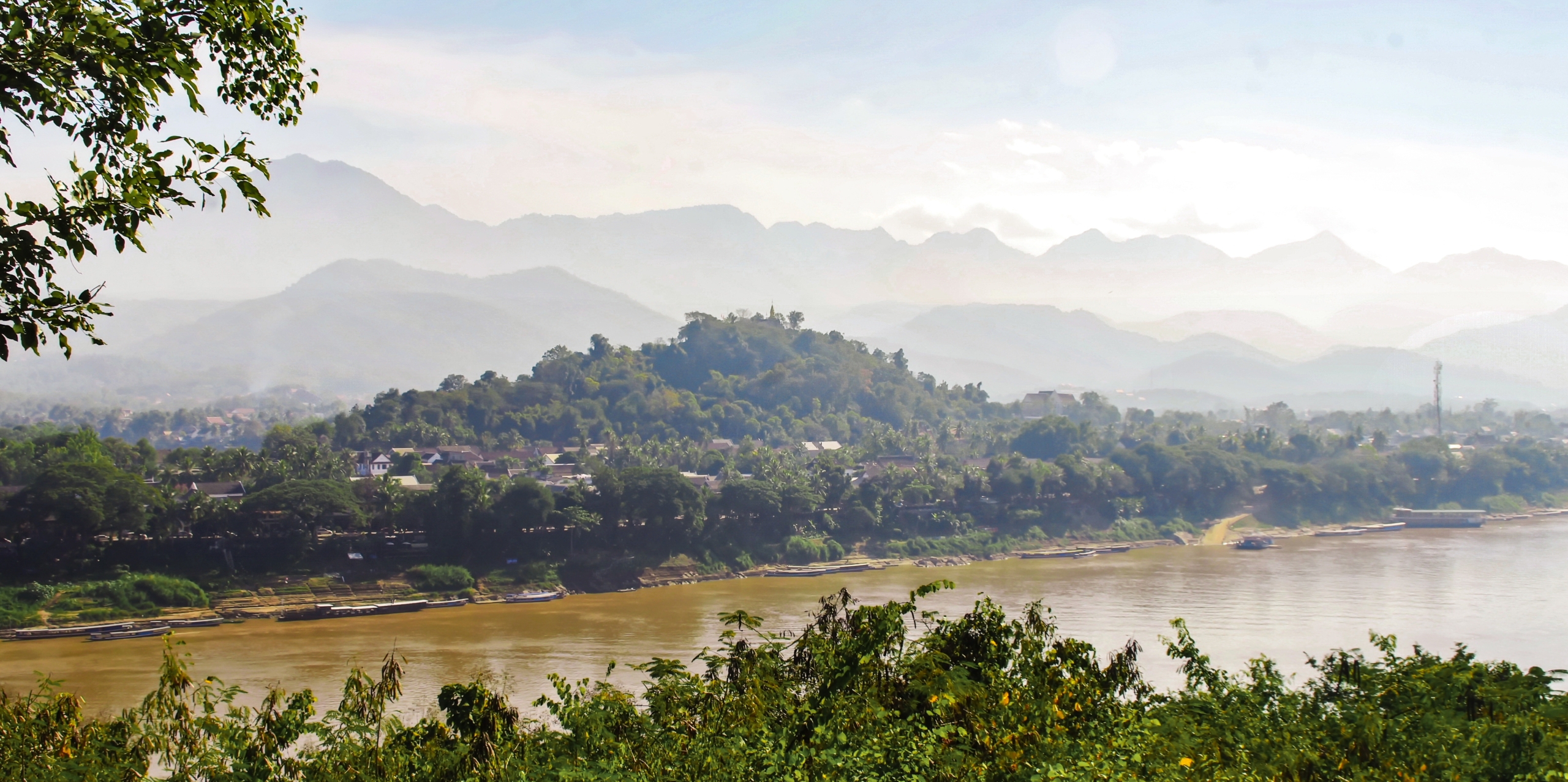
When the Siamese finally returned the statue in 1839, the kingdom of Vientiane no longer existed: the Phra Bang was therefore handed to Soukhaseum, King of Luang Prabang. It came home along the right bank of the Mekong, on a trail remembered ever since as the “Phrabang Road“, which reaches the river opposite the city at the village of Xieng Mene. The statue was then solemnly reinstalled at Vat Vixun.
From Vat May to the Royal Palace
In 1894, King Sakharine — accompanied by the French explorer Auguste Pavie — had the Phra Bang solemnly transferred to Vat May, the sumptuous five-roofed monastery next to the palace, where it stayed for more than half a century, until 1947. The Buddha then moved to the Royal Palace, today the National Museum, where a chapel was built especially for it: the Haw Pha Bang, the elegant gilded sanctuary standing at the north-east corner of the grounds, facing Mount Phousi. That is where you can admire it today.
Pi Mai: when the Phra Bang leaves its chapel
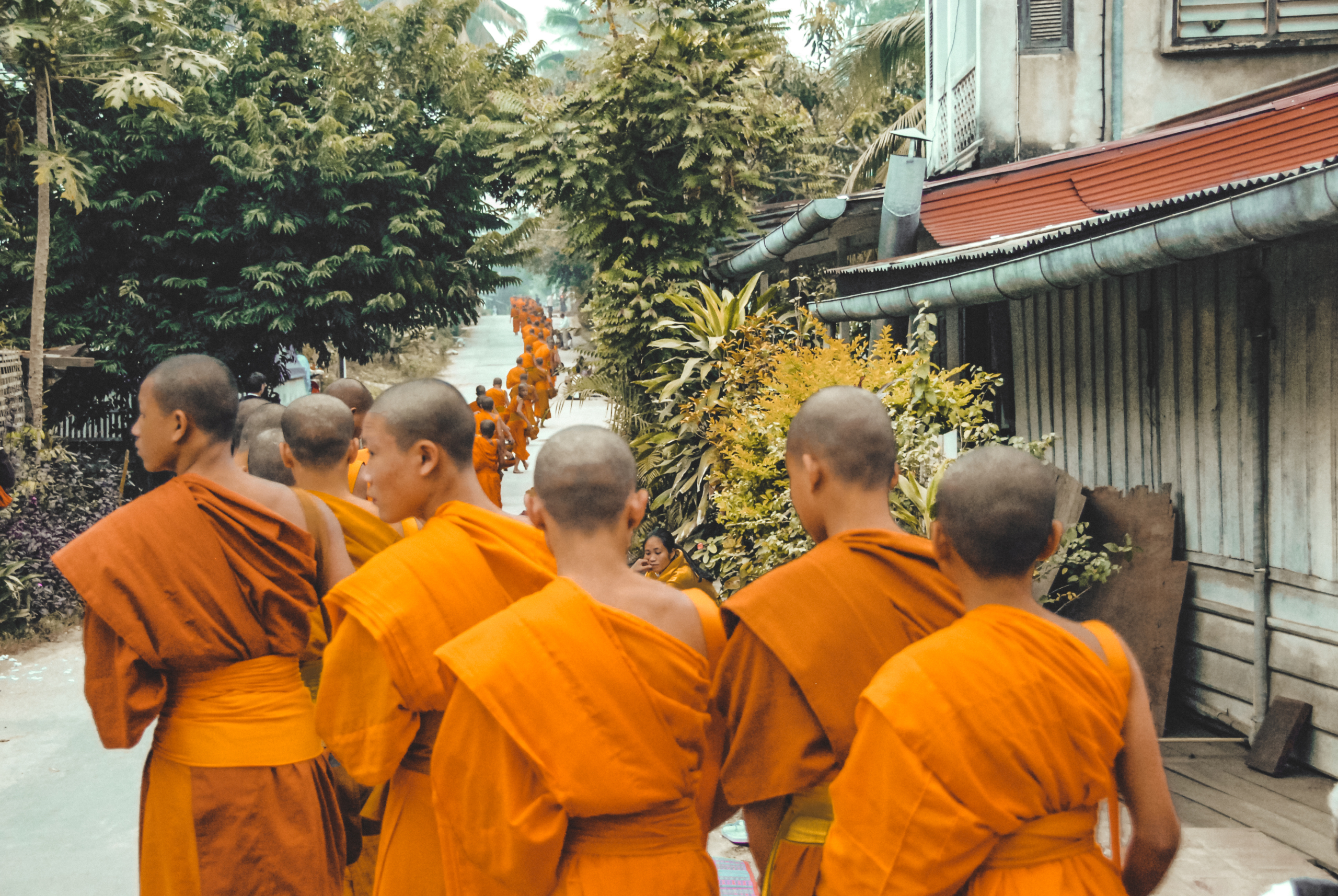
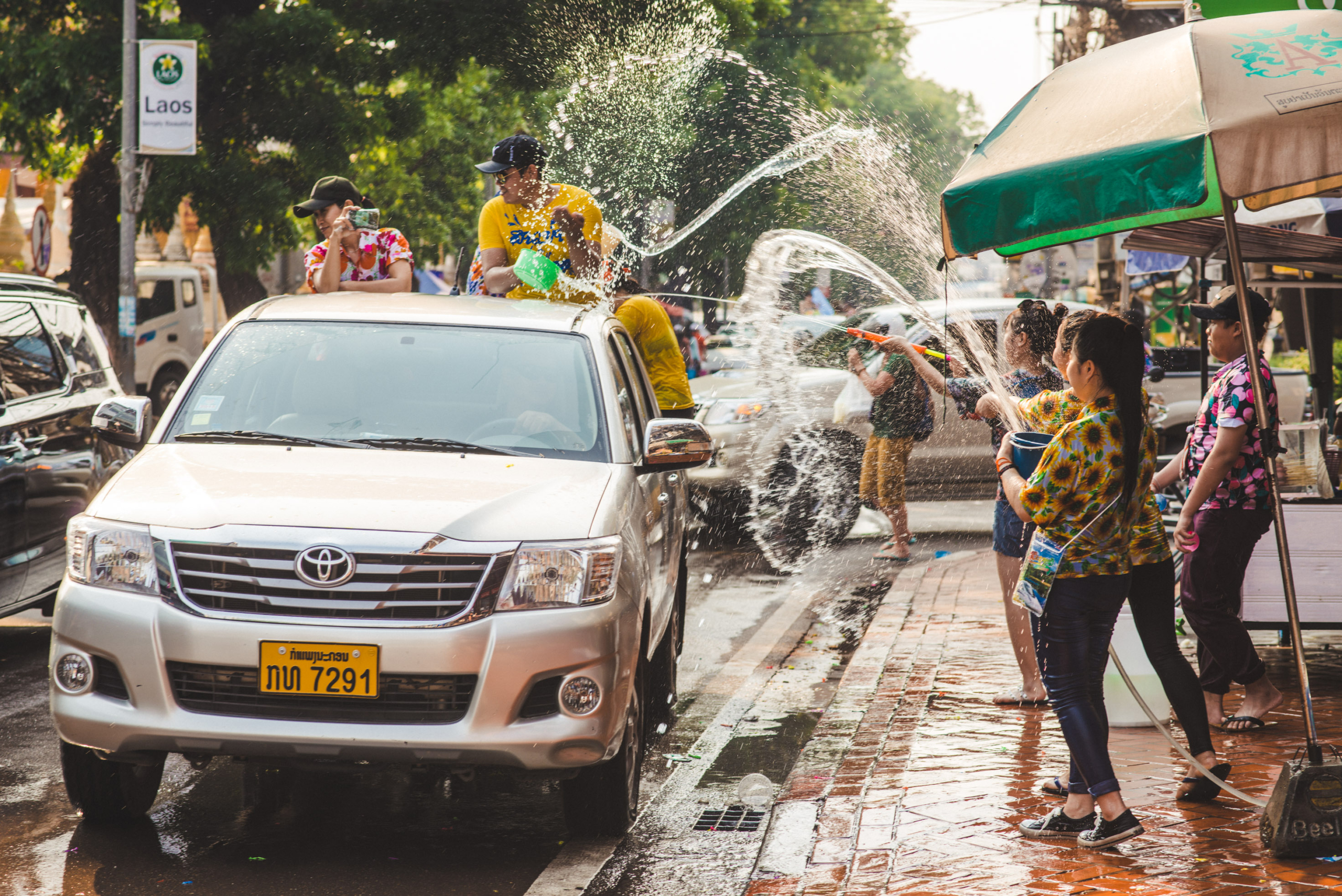
Once a year, the Phra Bang becomes the beating heart of the city again. During Boun Pi Mai, the Lao New Year (mid-April), the statue is carried in procession from the National Museum to Vat May, where the faithful come to pour perfumed lustral water over it for three days. This ritual bath purifies the statue, the city and everyone who joins in — one of the most moving moments of the year in Luang Prabang.
In the footsteps of the Phra Bang: our mini-itinerary
- The Haw Pha Bang (National Museum): start with the chapel of the Phra Bang itself.
- Vat May: its five-roofed sanctuary housed the statue for 50 years.
- Vat Vixun and its That Mak Mo (the “watermelon stupa”): twice home to the palladium.
- Cross the Mekong to Xieng Mene: on the right bank, far from the crowds, you are walking the “Phrabang Road”.
Read the full story of the city in our article on the history of Luang Prabang, and explore its monasteries with our guide to the temples of Luang Prabang. If sacred statues fascinate you, don’t miss the astonishing story of the Pha Singkham Buddha of Muang La, northern Laos’ other great palladium.
Would you like to discover Luang Prabang with a guide who tells you these stories in front of the monuments themselves? Contact our team: a local agency based in Laos since 2002, we craft your tailor-made journey in Laos.
To actually walk the “Phrabang Road”, read our guide to Chomphet, Luang Prabang’s right bank of the Mekong.