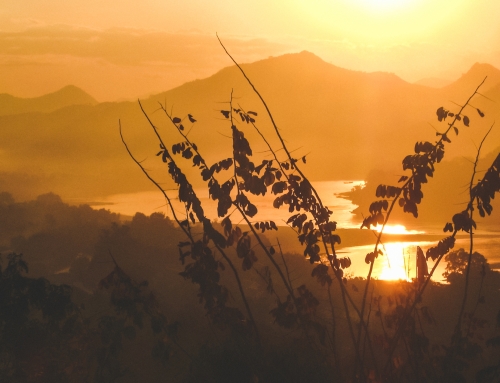

At the very tip of the Luang Prabang peninsula, where the Nam Khan meets the Mekong, stands the largest and most beautiful monastery in the city: Vat Xieng Thong, the “monastery of the golden city”. A royal foundation of 1560, spared by every misfortune of history, it is the absolute masterpiece of Lao art — and the monument our guides love to reveal in late afternoon, when the golden light sets its mosaics ablaze. A guided tour.
The monastery of the city gate
Vat Xieng Thong was built in 1560 by King Setthathirat — the very king who moved the capital to Vientiane, taking the Phra Bang with him. Tradition holds that it honours the memory of Thao Chanthaphanith, a merchant whom legend says was chosen king of Luang Prabang long before Fa Ngoum’s arrival. As the monastery of the “city gate”, it owned the landing stage of honour: it was through its riverside gardens that sovereigns and distinguished guests once entered the royal capital.
Its lucky star has never dimmed: when the Black Flags sacked Luang Prabang in 1887, the monastery was spared — the raiders’ leader, Deo Van Tri, had been a novice monk here in his youth. First restored in 1928, it recovered its full glory during the great redecoration campaign begun in 1960.
The sanctuary: Luang Prabang style at its purest
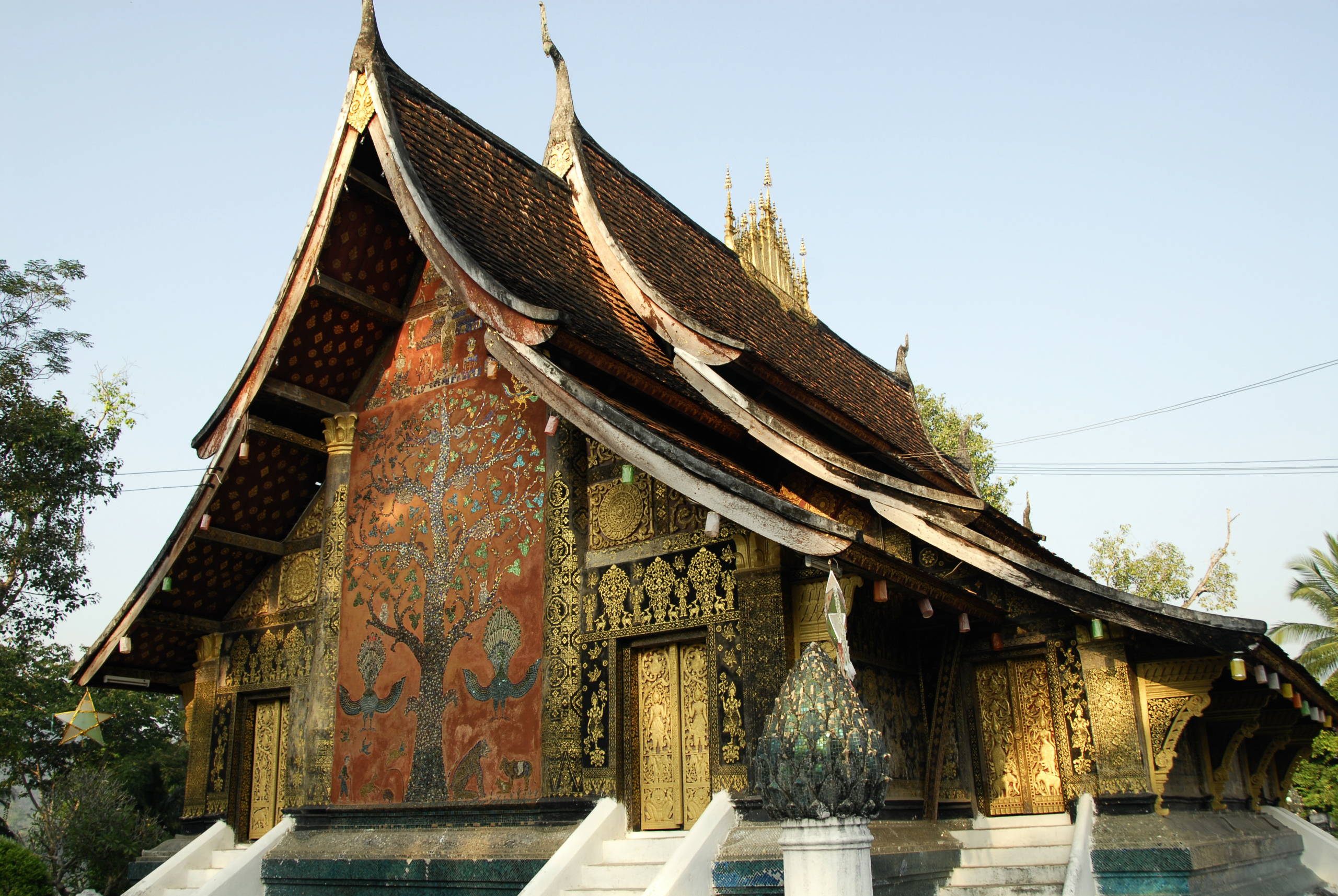
The main sim is the archetype of the Luang Prabang style: a majestic multi-tiered roof sweeping almost to the ground, a gilded façade on red ground, black pillars stencilled with gold. At the very top of the roof, look for the dok so fa, the “bouquet of heavenly flowers”: a delicate seventeen-point ornament.
The most photographed treasure, though, is at the back: on a bright red ground, an immense mosaic of inlaid coloured glass depicts the Tree of Enlightenment, the Tree of Life beneath which the Buddha reached awakening. This mosaic technique is Lao and very old — it already adorned the doors of That Ing Hang, near Savannakhet, in the 16th century. Inside and along the side walls, gilded murals tell the legends of Thao Chanthaphanith, Sisouthone and Souttasom.
The Red Chapel and its travelling Buddha
Behind the sanctuary, the “Red Chapel” shelters one of the very rare Lao bronze images of the reclining Buddha entering nirvana. Cast in 1569 on the orders of King Setthathirat, this piece of nearly two metres has led an adventurous life: it left for the 1931 Colonial Exhibition in Paris, then lingered in Vientiane, and only came home to Luang Prabang in 1952!
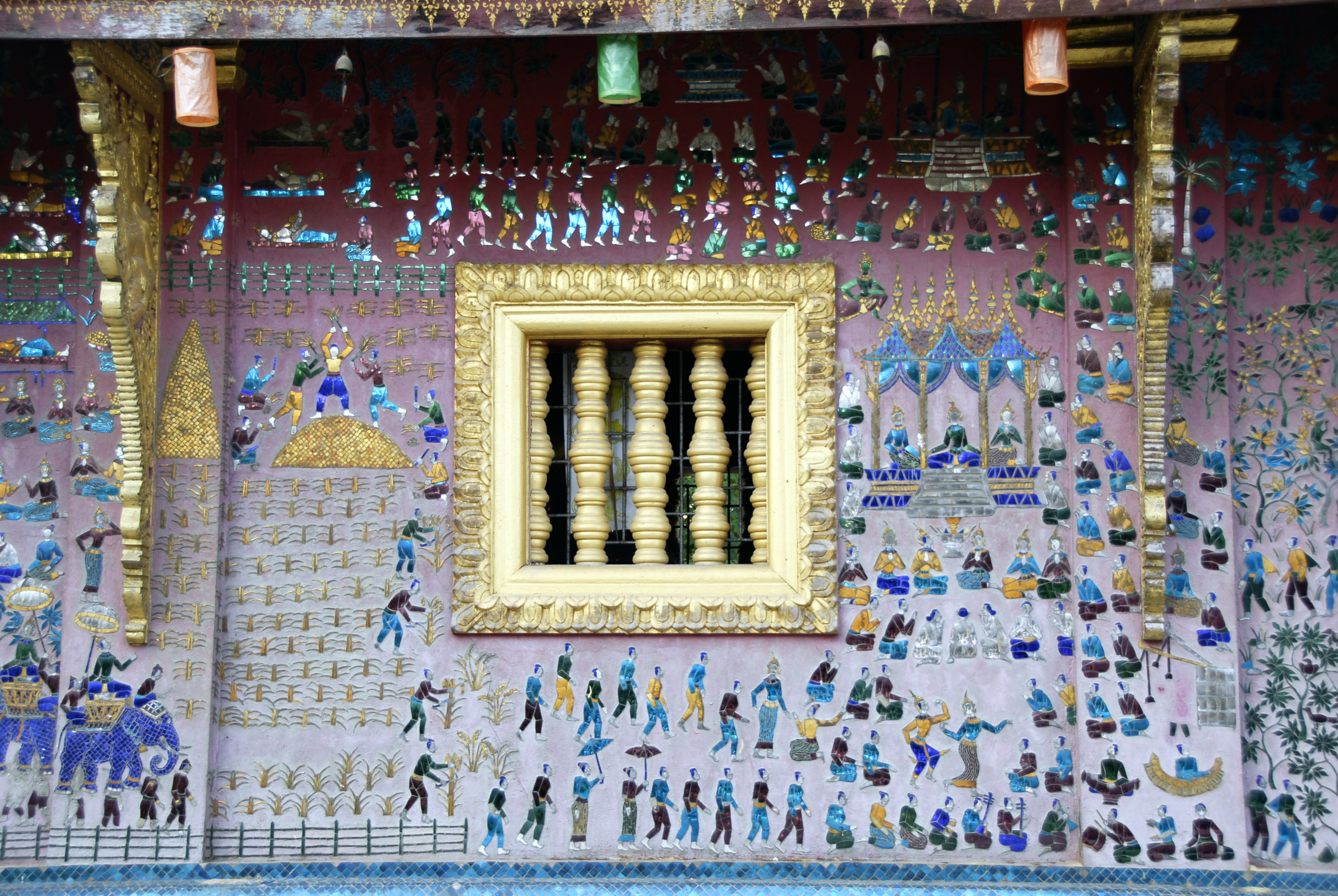
For the Buddha’s 2500th anniversary in 1957, the chapel’s outer walls received an exceptional coat of mosaics: on a red ground, hundreds of tiny glass figures tell the story of Sieo Savath, a 17th-century tale whose hero, a sage among sages, handed down judgements worthy of Solomon. Fishing scenes, hunting scenes, village life: all of old Laos glitters on these four walls.
The royal funeral chariot chapel
To the right of the east entrance, an entirely gilded hall built from 1962 in the Xieng Khouang style houses the funeral chariot of King Sisavang Vong and his twelve-sided urn. The huge carved and gilded wooden panels around it unfold the great episodes of the Ramayana — look for the Golden Deer, Sita’s trial by fire, and the astonishing fight of the vulture Satayout against hundred-armed Ravana, each hand wielding a different weapon.
More treasures around the grounds
- The chapel of the standing Buddha: a former library with a curious “ace of spades” roof, home to a bronze Buddha in the Ham Nhat attitude (“calming the family quarrel”), a gift from the King of Thailand.
- The drum shelter (ho kong), at the far corner of the garden: a small building of rare perfection, protecting a great drum hollowed from a single metre-wide tree trunk.
- The elephant pillar, left of the east gate — the last of the three the city once counted.
Vat Xieng Thong and Lao New Year
The monastery is one of the great stages of Boun Pi Mai, the Lao New Year: on the festival’s second day, a grand procession brings the abbots of the city’s monasteries here for the ritual watering of the Buddhas, to the sacred dance of the Pou Nheu Nha Nheu, the red-maned masked ancestors. At the foot of the vat, families cross the river by pirogue to build little sand stupas crowned with paper banners on the sandbank — as many grains of sand, as many blessings for the year.
Visiting tips
- Best time: late afternoon, when the low sun makes the mosaics of the rear façade and the Red Chapel blaze.
- Dress code: shoulders and knees covered, as in every vat.
- Combine it: the monastery sits at the very end of the peninsula, the perfect finale to a stroll along the main street — our guide to the temples of Luang Prabang maps the full route, and our article on the history of Luang Prabang sets the scene.
Would you like to walk through Vat Xieng Thong with a guide who deciphers every mosaic for you? Get in touch — a local agency in Laos since 2002, we create your tailor-made journey.
Extend the discovery: right across the river from the monastery, the Mekong’s secret right bank and its monasteries await.